|
| Rio
Grande Nature Center and Preserve Albuquerque, New Mexico 1982 |
|
|
|
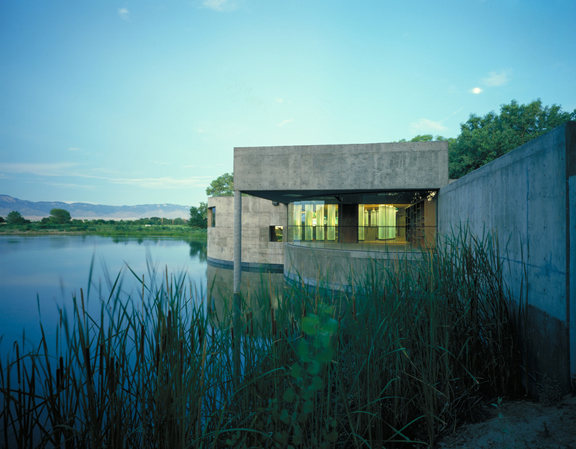
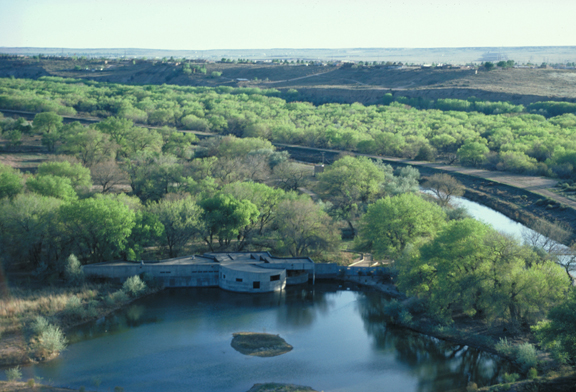
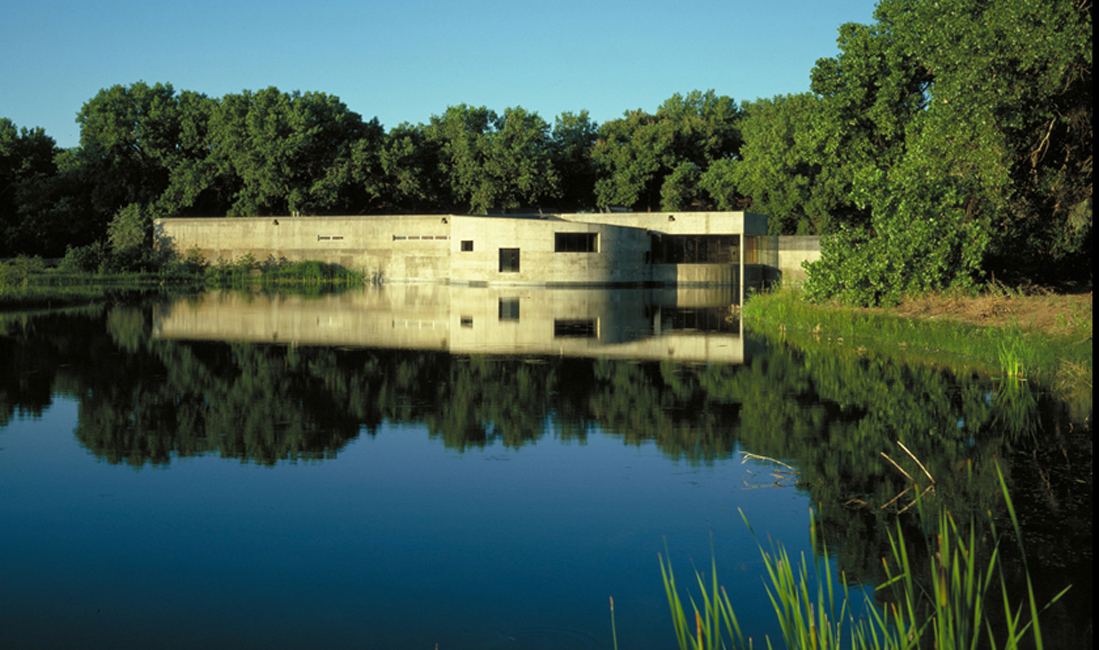
The Rio Grande Nature Center and Preserve is a symbol of a profoundly important, but rapidly diminishing New Mexico ecosystem. The open fields are vestiges of a beautiful pastoral setting which once stretched the length of the city. The natural wetlands still harbor a diverse set of environments that sharply contrast with those of the upland semi-arid mesas. Acquisition of the site by the State of New Mexico offered a unique opportunity to maintain the important connections between the city and the river, its symbiotic agricultural development and a prime wildfowl preserve located in a migratory fly way.
In response to these resources and intents, Antoine Predock developed
the master plan for the Rio Grande Nature Center and Preserve. Environmental,
legal, historical and recreational conditions were incorporated into the
planning, phasing and design criteria established for the various components
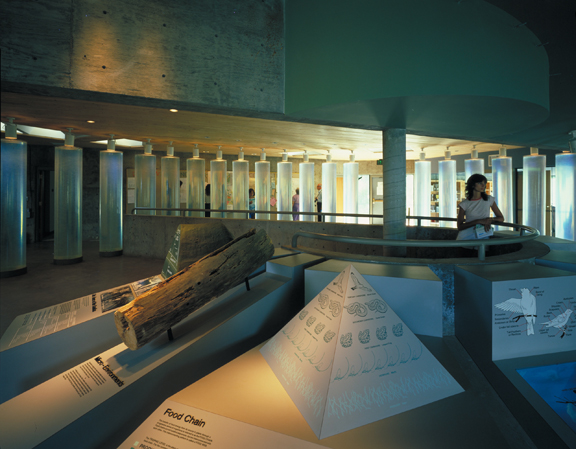
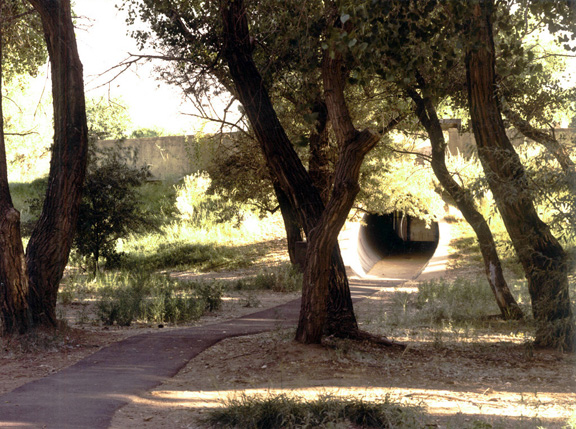
of the site. There is an element of ‘river-edge vernacular’ to the building; an 8-foot diameter, corrugated drainage culvert forms and frames the tunnel entry into the center. Upon entering, visitors become aware of the salient feature of both the preserve and the building: vertical, 8-foot-high, water-filled tubes encircle a sunken, ramped exhibit and viewing area. Light shimmers through these tubes from skylights to create an underwater effect. The ramp descends physically and symbolically to allow views of the vast forage areas, the marshlands and a reverse-periscope underwater image of the pond. At each stage along the ramp, interpretive displays augment the views; similarly, the exhibits complement interpretive trails which lace the refuge. |
| PROJECTS | TEACHING | CONTACT |
|